
The world of biology is a massive field and can be intimidating to people, especially when doing personal research. Below are the levels of biological organisation, starting at the simplest building blocks of life all the way up to the entirety of life on planet earth. No single person is able to study and utilise knowledge from all of these levels of organisation to the depth of understanding that is available. Information has therefore been broken up into different professions. Atoms are usually studied by physicists, molecules by chemists, and so on. Some professions overlap and rely on each other, and some are required to study large parts of this organisation, such as doctors who are required to study everything from individuals to cells. This website will mostly be going over the highlighted area in order to give a full understanding of cancer with all of the necessary context.
Atom
Atoms are collections of protons, neutrons and electrons. Depending on the number of protons an atom has, it is classified as a different element. Elements have been organised into a table known as the periodic table. Depending on the number of neutrons it can be classified as a different isotope of that element. Depending on the number of electrons to protons an atom can have a charge making it an ion; If it is negatively charged (has more electrons than protons) it is called an anion and if it is positively charged (has less electrons than protons) it is a cation. Atoms often form bonds with each other to become the next level of organisation, molecules.
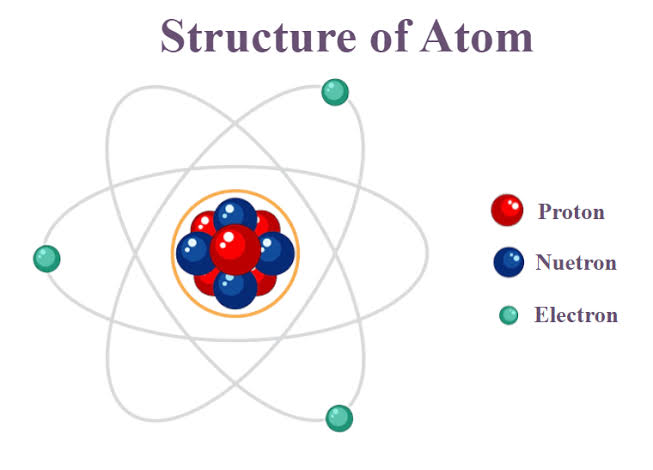
Fig 1: A basic diagram of an atom.
More information can be found in sites such as here: https://www.iaea.org/newscenter/news/what-is-an-atom or here: https://www.geeksforgeeks.org/chemistry/what-is-an-atom/.
NOTE: this field is still under research and some questions may not yet have answers.
Molecule
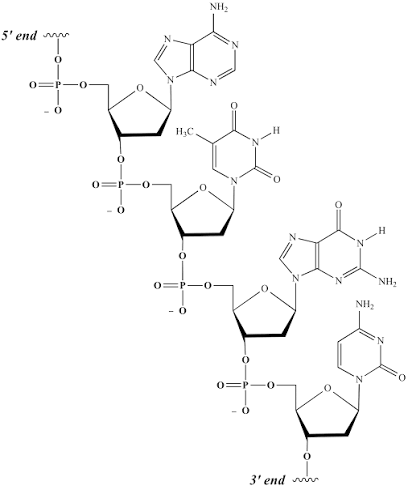
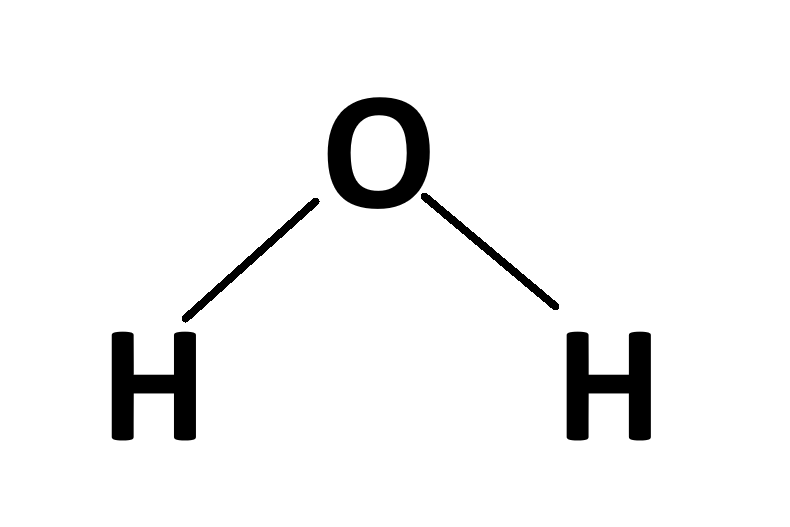
Molecules are collections of atoms. The official definition of molecules dictates that molecules are 2 or more atoms bonded together, and are the smallest possible particle that retains the properties of the chemical substance. Molecules can be simple and uniform, such as water which is made of 2 hydrogen atoms bonded to 1 oxygen atom, or remarkably elaborate, such as deoxyribonucleic acid (DNA), which can have billions of atoms grouped into a single molecule. More on DNA here and if the diagrams do not make sense a guide on how to read them can be found here. Molecules make up almost everything, and it does not have to be biological, however, for the purpose of understanding biology this website will only be discussing molecules that relate to biology. Molecules then make up the next level of organisation, organelles.
Organelle
Organelles are the components that make up cells, they are separated by purpose and function. A popular organelle is the mitochondria. This organelles’ main function is to create ATP (adenosine triphosphate) which is the main source of chemical energy within a cell. Other organelles can have roles such as synthesising proteins or housing the DNA of a cell. All of these organelles work in tandem to create a functioning cell, the next level of biological organisation.
Cell
Cells are the basic structural unit of all known life on earth. Some organisms comprise a single cell (unicellular) such as bacteria, while others are made of multiple cells (multicellular) such as humans. Cells are generally defined by having cytoplasm enclosed in a membrane, most other features of a cell can vary from organism to organism. For example, plant cells have organelles called chloroplasts that allow them to perform photosynthesis, while cells found in animals do not. For the purpose of understanding cancer this website will mostly discuss human cells. It is still important to note that there are many different types of cells in different organisms that can have very different features and functions. Even cells within one organism can have vastly different structures and roles. Cells within an organism that have the same function are grouped into tissues.
Tissue
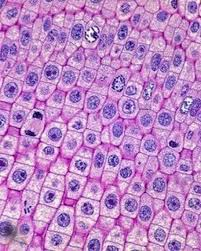
Tissues are simply a way of categorizing cells within a multicellular organism that work to carry out the same specific function. Multicellular organisms have a unique advantage in that each cell does not have to complete all tasks necessary for life. While in early stages of embryonic development cells begin to change in a process known as specialization/differentiation. Each cell has a complete copy of that organism’s DNA, however as an embryo grows, different cells can receive different signals due to being in different parts of the blastocyst. These cells then express different parts of the DNA and specialize into specific roles. After birth most cells are specialised and will only reproduce cells of the same type. If, for example, muscle tissue was damaged, surrounding muscle tissues can repair the damage by reproducing themselves. Each of these different types of cells with different functions are considered a separate tissue. Note that although all of the cells within a tissue have identical functions they are not necessarily identical, as different cells can have different variables as they work, such as space and nutrients. These variables can then affect how they grow and look (this is shown in Fig 3). Multiple tissues united together for similar function are called organs.
Organ
Organs are multiple tissues that work together to carry out a function. This can sound similar to tissues so an example to distinguish the two would be the heart. The heart is an organ, its function is to act as a pump, rhythmically circulating blood throughout the body. For this to work it needs cells that will contract and move so as to push in certain cavities and create force that drives circulation. This rhythmic pumping uses muscle tissues. It also needs epithelial tissues to keep the blood where it should be and prevent it from spilling out in the wrong places. The heart also needs connective tissue cells that work together to keep its shape and allow for all the correct cavities and valves to remain open and structured. Each of these tissues (muscle, epithelial and connective) carry out specific functions that allow the heart to function and pump blood. This is a simplified version of the heart, the aim of the example was to give context and distinction between tissues and organs, not be a detailed guide to the heart. These organs then can be grouped together into systems.
Organ system
Organ systems are the final level of organisation within the human body, each system is defined as having multiple organs working together to carry out tasks necessary for survival of the organism as a whole. A healthy human body should have 11 organ systems, although some sources may say 12 as the endocrine system can be considered 2 different systems. To continue with the example of the heart, it is part of the cardiovascular system, the heart pumps blood through arteries, capillaries, and veins. All of these organs work together for the common goal of circulating essential nutrients, immune cells, chemical signals and more. All of these systems comprise a complete individual.
Individuals
Individuals are the final level of biological organisation that is relevant to understanding the biology and treatments for cancer. Individual simply refers to a single organism as a whole. In the context of human biology this simply refers to the entirety of a human body.
Population
In the context of human biology populations are groups of humans living within a specific geographic area.
Community
Communities in regard to biology are all organisms interacting and living within a particular area.
Ecosystem
All living things within a set area and how they affect each other.
Biome
A large distinct area separated by conditions such as temperature soil etc.
Biosphere
All life on earth.
All of these categories will hopefully allow the reader to slot new information into this format, making it easier to understand where each piece of this complex disease falls.
More information can be found here: https://med.libretexts.org/Courses/Las_Positas_College/BIO_50%3A_Anatomy_and_Physiology_(Zingg)/01%3A__Introduction_to_Anatomy_and_Physiology/1.02%3A_Levels_of_Organization